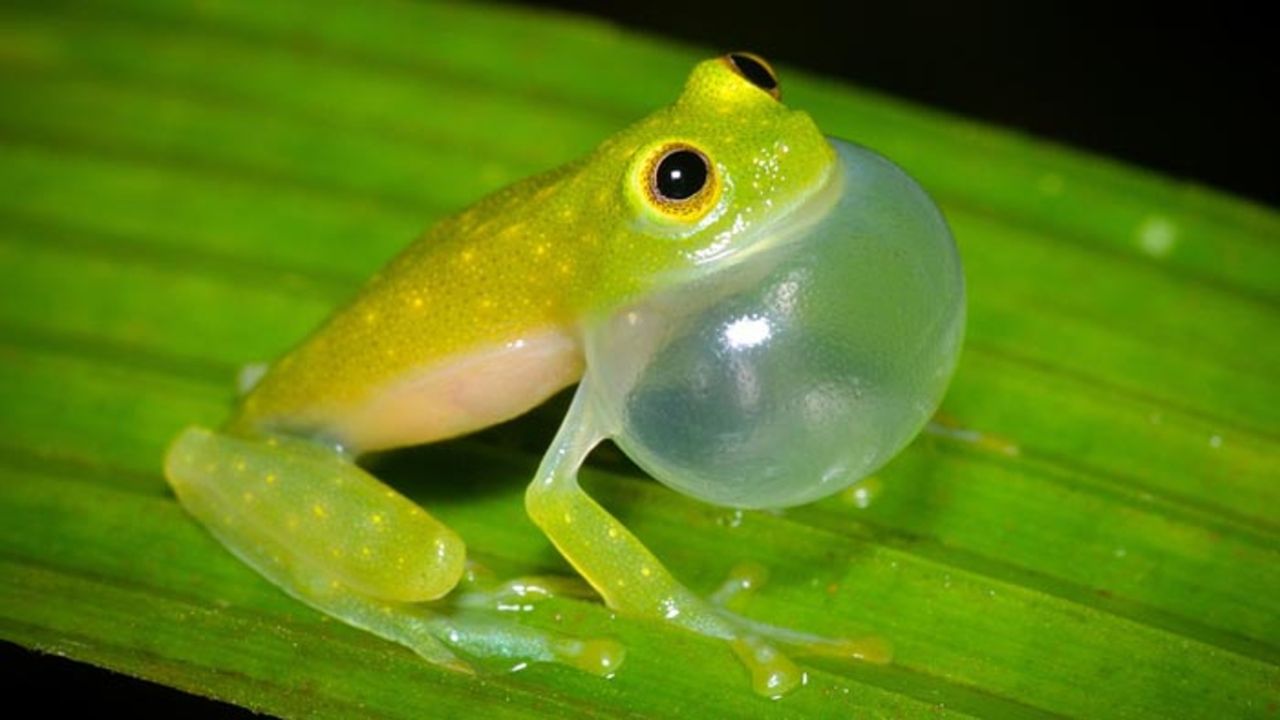

According to the work published in the journal Sciencethese amphibians that inhabit the american tropicsson nocturnal animals who spend all day sleeping face down on translucent sheets of the same color as its back, in what constitutes its camouflage tactic par excellence against its predators.
This way, the skin under the animal becomes totally translucent, which allows you to see both its vital organs and all its bones, confirming that wonderful and unique appearance.
“Hay more than 150 known species of glass frogs in the world and we’re just beginning to learn about some of the amazing ways they interact with their environment,” said Jesse Delia, a specialist at the American Museum of Natural History and co-author of the study.
“Transparency is a common form of camouflage among animals that live in the water, but it is rare in terrestrial Vertebrates, because the circulatory system it’s full of red blood cells that interact with light,” added who also works at Duke University.
As the specialists explained, glass frogs hide red blood cells from view, for what they pretty much put into their respiratory system during the day, even at very high temperatures, while when they need to be active again, they put red blood cells back into the blood, giving them the ability to move. And, precisely at that moment, the light absorption of these cells breaks the transparency.
To carry out this investigation, which took several years, the researchers used a technique called “Picture photoacoustics”, which uses light to induce the propagation of sound waves from red blood cells, allowing map the location of cells inside sleeping frogs without disturbing them, since transparency is altered by activity and anesthesia, as well as by stress and death.
The team of professionals took as a reference the species of glass frog called Hyalinobatrachium fleischmanniwhich, while in a state of rest, multiply by two or three the transparency by withdrawing from circulation almost 90% of your red blood cells and package them in the liver, which contains reflective crystals of guanine.
Now, the researchers hope that this research will stimulate biomedical work to translate the physiology extremes of these frogs into novel targets for both human health and medicine in general.