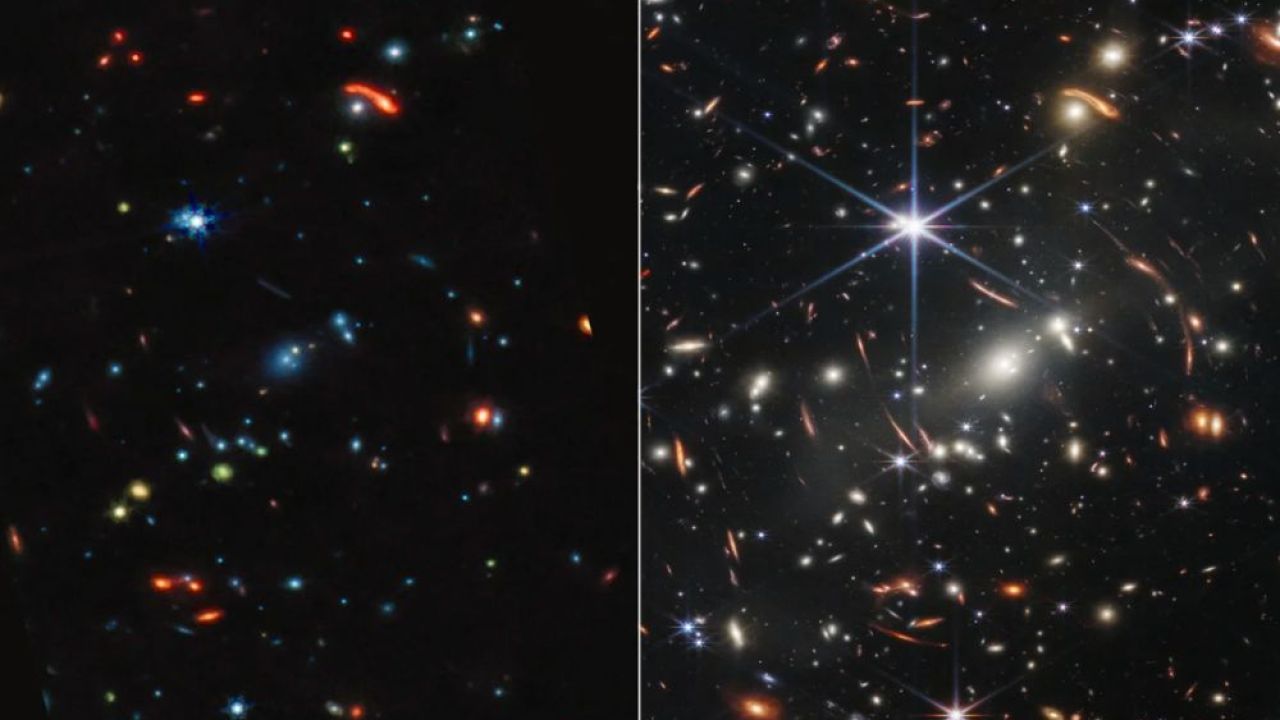

A series of images obtained through the James Webb telescope identified two of the phenomena never before photographed. and the portraits they added light to science.

Is about a revolutionary device designed to peek into the cosmos to the dawn of the universe, shows the galaxy cluster SMACS 0723, known as the First Deep Field.
The first photo is about the carina nebulaone of the largest and brightest in the sky, located approximately 7,600 light years away is the southern constellation which bears the same female name. Nebulae are stellar nurseries where stars form. The Carina Nebula is home to many massive stars, several times larger than the Sun. behind the curtain of dust and gas in the “cosmic cliffs” of this nebula, the Webb image shows that there are baby stars previously hidden. The new view gives a rare glimpse of the stars in their early and rapid stages of formation. For an individual star, this period only lasts between 50,000 and 100,000 years.

The second image was that of the South Ring, also called Eight Explosions; is an expanding cloud of gas surrounding a dying star. have almost half a light year across and is approximately 2,500 light years from Earth. In the image, there is a faint trail of gas and dust that the telescope sees through in unprecedented detail. It reveals for the first time that the star is covered in dust. In thousands of years, these delicate gaseous layers They will dissipate in intermittent space.

in this note