

Two thousand twenty-two will be remembered as the year in which we observed the universe like never before and like the one that finally made us take a deeper awareness of the ravages of climate change. Advances with less impact, but decisive for a better understanding of our species, also deserve a prominent place. Below is a selection of seven of the 22 milestones of the year proposals by National Geographic.
The creation of the universe
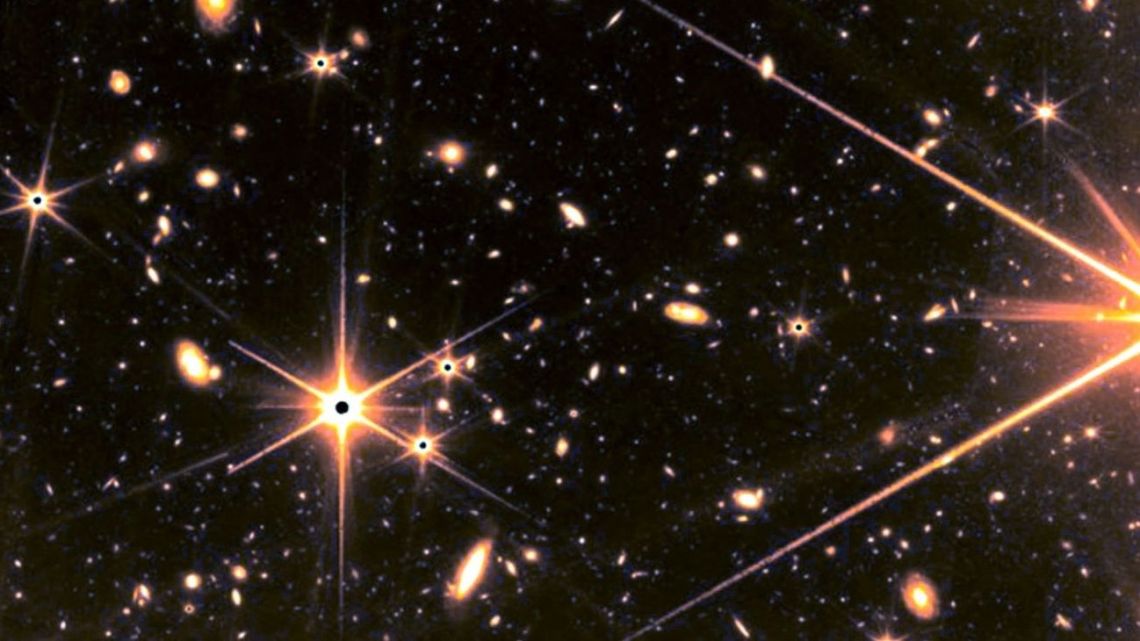
The james webb space telescope was the science star of 2022, presenting an unprecedented perspective on the cosmos. The picture of distant galaxiesenlarged by the gravity of others, it was “the deepest view of the universe ever seen”, which also revealed the process of its creation.
At the end of September, the agency added another great impact, by showing Neptune with beauty and precision. In addition to the glowing rings, humanity was able recognize seven of its 14 moons. “The telescope is now busy with a long list of planned observations, exploring everything from the oldest galaxies to the atmospheres of distant exoplanets,” he recalls. natgeo. There will be more surprises in 2023.
Climate alert on health
The impact of extreme temperatures and weather events it is increasingly tangible. The UN Intergovernmental Group of Experts found that we face an increased risk of lung damage from air pollution and an increase in diseases vector transmission that feed on blood, such as mosquitoes, that spread to new areas.
Perhaps the most worrying fact is that, in less than 80 years, three quarters of human beings could suffer extreme heat stress in a regular form. It is no longer just about reducing emissions; Now you have to think about adapting to a new world.
Summer 2023: the SMN expects temperatures “above normal” in the center of the country
resurrected organs
One hour after causing a group of pigs to go into cardiac arrest, neuroscientists at Yale University (United States) managed to preserve the function of their brains, hearts, liver and kidneys.
Thanks to a solution of amino acids, vitamins, metabolites and 13 additional compounds that they circulated in the bodies of the animals, heart cells developed to beat, liver cells reabsorbed glucose and DNA repair resumed. An achievement that could revolutionize the practice of transplantation, since thousands of organs are discarded every year because they are not immediately preserved. The next step will be to test the “resurrected” organs in live pigs.
plastic in the human body
The plastic it is all over the planet, from the depths of the ocean to the top of Everest. But in a demonstration of our species’ unstoppable dependence on the multipurpose material, this year it appeared for the first time. nanoplastics in donated blood, which could have been inhaled or ingested, and plastic fibers in the lungs of surgical patients.
It is not yet clear how they can harm our health, but “we should be concerned,” observes eco-toxicologist Dick Vethaak. “Plastics shouldn’t be in your blood.”
More hints of water (and life?) in the Martian past
The Perseverance vehicle of the POT keep looking Signs of life on the Red Planet. His travels through Jezero crater, a 45-kilometre-wide basin that was likely once filled with water, found something intriguing: a series of purple layers reminiscent of a rock veneer formed on Earth by microbes.
As the rover now explores an ancient river delta on the crater rim, 14 rock samples rest on the Martian surface for a future mission to collect and – if lucky – reveal new data about the possibility of life beyond Earth. .
Demand to incorporate environmental crimes into the Penal Code
A ray of light on the Denisovan mystery
The Denisovans broke away from the neanderthal man and modern humans about 700 thousand years ago, but they are still unknown to world science. Until 2022, only a handful of teeth, a little finger bone, fragments of a skull and jaw in Siberia and Tibet.
This year was added the discovery of a molar thousands of kilometers away, in a cave of Laos. A finding that reveals the great adaptability of these close relatives, who left traces of their DNA in current populations of Asia and Oceania.
The art that returned after 2,600 years
Soldiers, archers and camps resurfaced after 2,600 years thanks to an Iraqi-American excavation near Mosul in northern Iraq. While exploring the ruins of an ancient palace gate destroyed by ISIS, archaeologists revealed an impressive set of works spread across seven carved stone panels.
The scenes depicting the military campaigns of the Assyrian king Sennacherib are complemented by others featured in the collections of the British museuma turning point in the history of universal art.
PAIR JL
You may also like