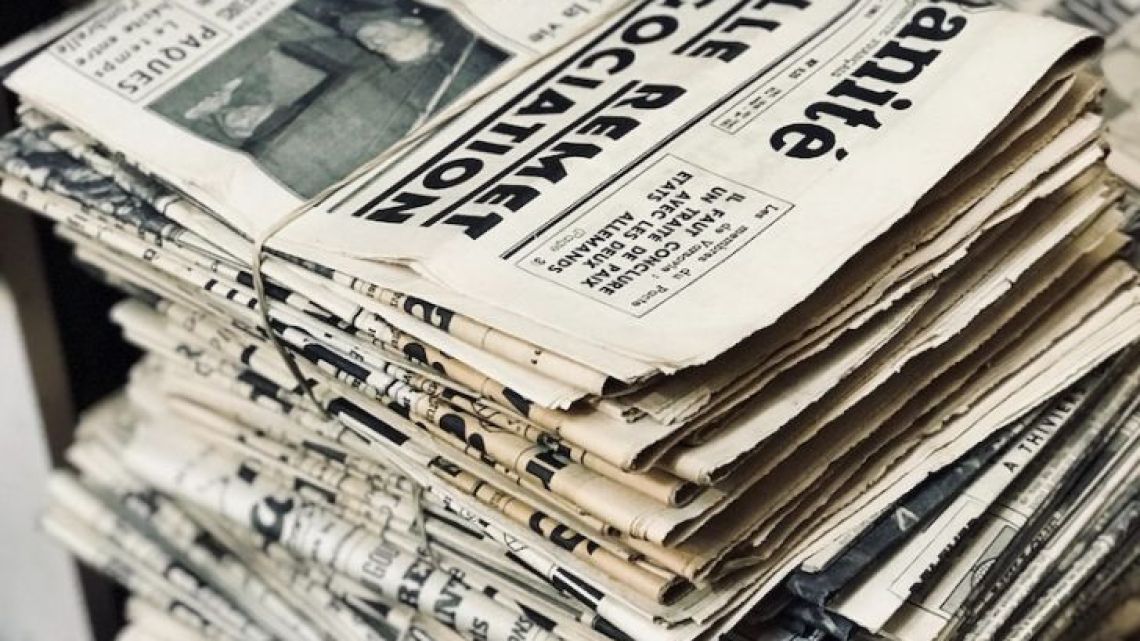


When in England the press was still a vehicle for instruction, invective and political pressure, Émile Girardin founded the newspaper “La Presse” (1836) in France, considered the first modern newspaper, in force for almost a century.
The innovation consisted of accumulating income from advertising and lowering subscription prices, when the rest of the newspapers had an annual cost of 80 francs, La Presse came out at the price of 40. Its daily circulation reached 63,000 copies. In 1835, the “Journal des Débats”, which published 10,000 copies, received 20,000 francs per year for advertising. In 1838, the fourth page of La Presse was sold for 150,000 francs and in 1845, for 300,000 a year.
The sales success, due to its low cost, was reinforced by another innovation: the publication of novels in serials, although it never ceased to give importance to political gossip.
The French primacy in the field was reflected in the Gallicisms “journalism” in English and “annonce” in German.
Girardin. The founder’s pen, energetic, passionate and independent, was the big draw. For Marx and Engels, Girardin sought harmony between capital and labor through the elimination of ignorance to combat poverty, the establishment of credit, the multiplication of property, and the reform of taxes. The key was the budget and taxation. For that he proposed the tax as a kind of insurance: a premium that only the citizen who had access to State services would pay.
One would have to consider him a bourgeois socialist, since being a member of the Legislative Assembly he sometimes voted with La Montaña (heirs of Jacobinism), but at the same time he vehemently supported the liberal Émile Ollivier.
Against the alleged “dumping”. On July 25, 1836, Émile faced Armand Carrel, a historian and great journalist, in a duel. He was the editor of “Le National”, a republican medium that ran on expensive subscriptions. Carrel had challenged Girardín because he thought that he, with his business model, betrayed journalistic independence and not because they thought differently, in the rest.
Carrel was in favor of dueling: he had already beaten Roux Laborie, editor of “Le Revenant”, in another, for publishing about the Duchess De Berry. He did not have the same luck that dawn. Wounded in the English, while he died, the era of mass journalism, he was born. The contenders were not settling the path of journalism; the story was already written and the actors were in a tragedy. The nascent mass journalism was necessary and Girardin’s genius was to find a formula to finance its publication without having to resort to “protection money” and thus maintain independence.
Requiem for the mass newspaper? The golden age of the mass newspaper will take place in the United States between 1870 and 1914. From the beginning of the 20th century, radio first, television later, and the Internet finally, began to occupy the space of mass communication. The written press was and is less and less consumed. However, compared to the audiovisual media, it has the advantage of reporting from another perspective: it is what is called “cold” journalism. Suggestive transformation, from the “heated” passion of Girardín and Carrel.
[email protected]
You may also like