

It seems unquestionable that the political future is difficult for various and diffuse reasons that have to do with the construction of adequate forms of access to power and clear conceptions of government management. The discourses are intermingled and terms are fought, but on many occasions they are far from the real problems that citizens suffer and that worsen as they belong to more vulnerable social classes and with fewer defense weapons in a society that is increasingly complex and messy.
The door is open, then, for those who come to take advantage of this situation and much more closed for those who seriously seek to reverse what is wrong. It is easier to criticize and sell smoke than to manage with quality, something that even after it is achieved, it is difficult to communicate so that citizens value what has been done. Because when something improves, it is taken as natural, it is naturalized, and perhaps it is not bad.
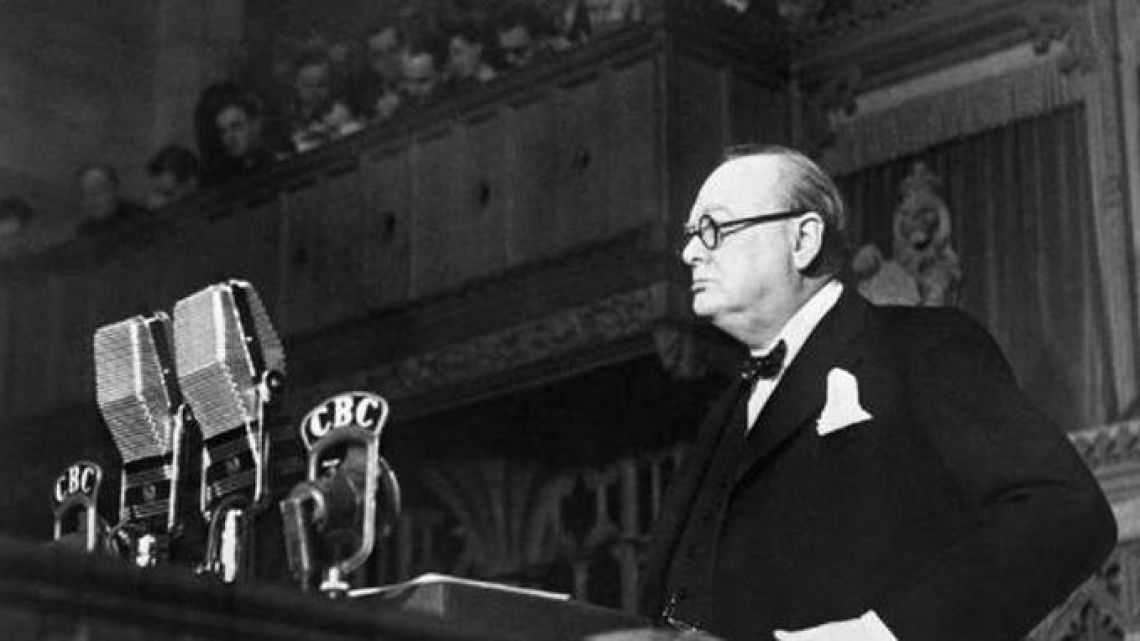
The achievements of little serve to curb the anxiety for what fails and that often has a long, sacrificed and complex solution. Something will change the day our society votes for whoever comes to propose not artificial paradises but “blood, effort, tears and sweat”, according to Sir Winston Churchill’s magnificent formula, to which effort is often omitted, curiously.
The French sociologist François Dubet goes to the bottom of the issue by analyzing the present world crisis in his book “The time of sad passions. How this unequal world leads to frustration and resentment and discourages the fight for a better society” (2020) and summarizes: “We must try to understand why anger against inequalities is transformed into expressions of resentment and indignation, which most of them do not end in any organized action, nor in programs. Instead of fighting injustices that they condemn, populisms are outraged and denounce the elites, the oligarchy, the poor and foreigners. What is this moral economy that produces anger and indignation, without being able to reflect on its causes?
It is interesting to observe that Dubet, from its European but global vision, includes among those denounced not only the elites and oligarchies but also the poor and foreigners. In every society, with right or left populism, an enemy is found on a daily basis to hang the responsibility for what is wrong, without assuming that beyond the denunciation and misleading speeches there are good public policies that can go against difficulties and, if successful, overcome or mitigate them.
Societies and the individuals that compose them not only have short patience, which is understandable, but are also prone to listening to populist siren songs and mistaking outrage for solution. Overall, there will always be someone on hand to blame for the evils, while ineffectiveness in government management is hidden.
Dubet goes further: “The regime of multiple inequalities coexists with the boom in digital communication… The ability to publicly express our own emotions and opinions makes each of us a militant of his own cause, a quasi social movement of only one, because it is no longer necessary to associate with others and organize to access public space. Sad passions often invade this direct expression when there are no mediations or filters to appease the reactions of Internet users. For this reason, in the face of every unpleasant experience on public transport, every football match, anyone can be carried away by anger, racism, denunciation, rumors, conspiracy theories. Anger and resentment, until now locked up in the intimate space, enter the public sphere”.
Argentina as a case. If Dubet were to analyze the case of Argentina, he could add that those drives are favored and channeled by those in power: populist governments, social movements and piqueteros, plus various sectors and institutions who want to maintain poverty because there they have a clientele that they save in their weakened speeches of the supposedly bad.
In this context, the formation of government elites is crucial. They are neither more nor less than the group of people, generally led by an individual or by a small group, who make specific decisions and have the responsibility of managing. They can do it well or badly and that is where they begin to carve out the democratic mechanisms for replacing one elite with another. These mechanisms today are in a moment of mutation, thanks above all to technological innovations, which make it unpredictable how the enormous crisis of representation will be rearranged. And for now they are out of sorts.
An old order has collapsed and a new one has not yet emerged. That is why grotesque political examples are multiplying all over the planet and deadlines are accelerating with a vertigo that populism takes advantage of efficiently. No one can deny that the old political system did everything to make this happen, with its myopia, its lack of social sensitivity and its inability to provide answers, but what emerges in its place can hardly replace it effectively.
In the context described, the role of this ruling group is very complicated because the other groups that want to access decision-making places use that climate determined by anger and resentment that makes everything more difficult. This situation, exacerbated by the difficulty of building an adequate mode of operation for these elites, is explosive. It was easier when there was a party structure that gave at least not so weak support to the political system. With the parties weakened, forced to unite to form government fronts, the rules of the game have changed and the right and the left now matter less, but rather the groups take place, with gravel of course, between populists or republicans.
Just as before there were nuances between right and left and there was more than one political expression that was difficult to frame or that had components from one side or the other, today the phenomenal trend is towards populism, which dyes everything and sneaks in everywhere. It offers an attractive formula of illusory solutions that never arrive but always have a culprit for the delay. And with that, he leaves democratic republicanism in an inferior position to fight. That is why it is so crucial to define these operations of the elites and achieve a synthesis of affinity to take charge of the issues.
In a recent conference on the provocative topic “Is it possible to live in a better world?” the philosopher Santiago Kovadloff, in the midst of various ideas that are worth reviewing in the video of the meeting, wondered if democratic democracies were only stalked by totalitarianisms. He came to the conclusion that no, that what those who do believe in democracy do is very important because it is essential that they confirm their predilection with actions, leaving comfort, apathy and above all believing that someone else will do everything. And he also analyzed how when that participation dispensation wins, it happens after a significant majority ends up voting for the mechanisms that do enormous damage to democracy using their tools and advantages. Overall, with a populist pulse, they blame others and never assume their responsibilities. Nearby examples abound.
The current scenario, then, calls for syntheses, union, harmony, the search for common denominators, minimum consensus, shared and solid programs so that populist lies and republican disunity do not leave the way clear for let those who only want to keep power govern without obtaining results and blaming the rest for which they are also responsible. That is why agreements are so key and, above all, the stark evaluation of the consequences of disagreements.
The political scenarios in Argentina still do not seem to be going down that path and it is noticeable how the remnants of the usual operations of the declining party are sticking their tail. All individual desires are attainable, but when they are brought to the common interest, they are unacceptable. And when conditions are built, as happened in 2019, for populism to take the reins, irreparable damage is being done.
*This column is also published in Mendoza Post.
You may also like