

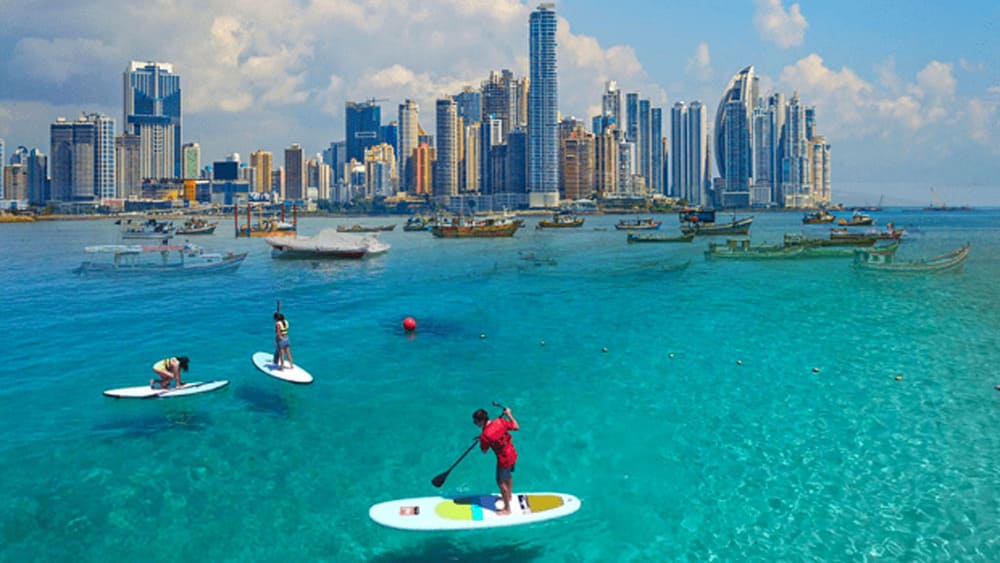

Panama City has seen sustained growth in interest in tourist and corporate rentals, driven by the constant influx of international professionals, urban tourism, and the search for models that generate steady income. This type of rental has become a significant alternative to traditional rentals, especially due to its ability to accommodate short- or medium-term stays and boost real estate profitability.
Interest in both tourist and corporate rentals across zones hosting projects like Armonía, just steps from the Cinta Costera, has steadily increased in recent years. This development sits in a prime section of Panama City near the financial district, Avenida Balboa, and several essential amenities, making it a favored option for executives, travelers, and temporary residents seeking strong connectivity and convenient access to the city.
Vacation and corporate rentals: two expanding models
Corporate rentals are designed for professionals arriving in the city for business, providing housing suited for extended stays of several weeks or months, and this group usually values strategic locations, quick access to business hubs, convenient transportation options, and well-equipped areas for both work and leisure.
Meanwhile, tourist rentals cater to visitors who want to explore the city and stay in well-connected, safe areas with nearby amenities. In both cases, location and the surrounding environment directly influence the decision to stay, beyond the apartment itself.
The Cinta Costera as a Hub of Urban Activity
The Cinta Costera is one of Panama City’s most iconic spaces. Its combination of green spaces, ocean views, and recreational areas makes it a daily destination for both residents and visitors. Furthermore, its connection to Casco Antiguo, Avenida Balboa, and the financial district reinforces its importance within the urban fabric.
Demand for housing in the surrounding area has grown steadily, driven by the influx of tourists and professionals seeking convenient, well-connected locations within the city.
What residents appreciate when choosing this kind of property
In the corporate and tourism sectors, the choice of accommodation is often influenced by comfort and the available amenities. Features such as coworking spaces, gyms, swimming pools, and common areas have become standard expectations.
These spaces enhance everyday life. For executives, they help maintain workflow without leaving the building. For visitors, they provide convenient places for leisure and entertainment without requiring long trips.
Adaptive approaches to managing rentals
A key feature of this model is the ability to adjust revenue based on demand. Property owners can modify rates depending on the season, the type of stay, or the occupancy rate.
Unlike standard leases, revenue does not remain constant year-round, as it generally fluctuates in line with local dynamics and visitor flow, particularly in economically vibrant and tourist-heavy locations like Panama City.
Armonía Cinta Costera Within the Current Market Landscape
The Armonía Cinta Costera development is strategically located just a short walk from the Cinta Costera. It features apartments with a functional and contemporary design, tailored to accommodate both short- and long-term stays, which aligns with the needs of the corporate and tourism markets.
The project offers amenities that include a coworking area, fitness center, swimming pool, rooftop theater, paddle tennis court, and various social zones. These features align with what today’s tenants look for, prioritizing convenience and on‑site services. In addition, its close access to restaurants, malls, banks, and medical facilities simplifies everyday living for those residing in the vicinity.
Where Location Equals Real Value
The growth of tourist and corporate rentals in Panama City reflects the importance of location, connectivity, and amenities in real estate profitability. The Cinta Costera area stands out as one of the city’s busiest hubs, while projects like Armonía Cinta Costera are part of this dynamic by offering conditions aligned with this type of demand.
The blend of a well‑positioned setting, practical architectural planning, and added services has fostered innovative investment approaches designed to yield income through adaptable leasing schemes, while in these models the surrounding city context and the user’s overall experience play a direct role in shaping market dynamics and long‑range value expectations.



.jpg "How Cap Cana’s urban development attracts homebuyers in the Caribbean")