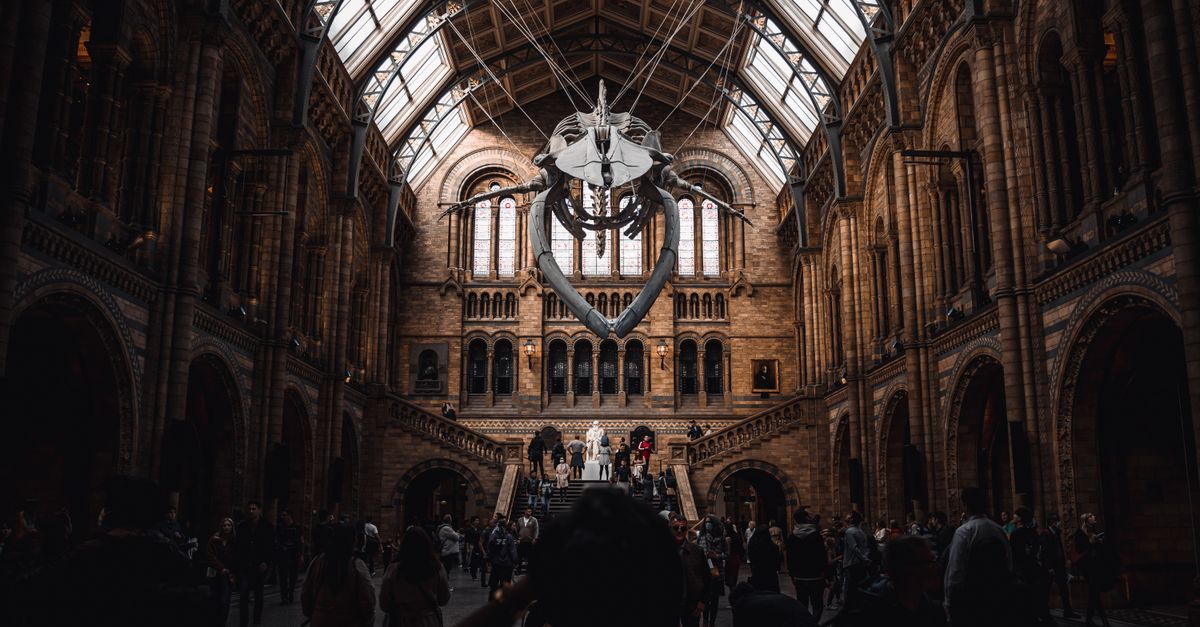

1. The Isabella Stewart Gardner Museum Heist (1990, Boston)
On March 18, 1990, two men posing as police officers entered the Isabella Stewart Gardner Museum and carried out what remains the largest art theft in history. Over 81 minutes, they stole 13 works valued today at more than $500 million, including pieces by Rembrandt, Johannes Vermeer, and Edgar Degas. Among the most significant losses were Vermeer’s The Concert and Rembrandt’s The Storm on the Sea of Galilee, the latter his only known seascape. Despite decades of investigation and a standing $10 million reward, none of the artworks have been recovered.
2. The Mona Lisa Theft (1911, Paris)
Back in 1911, Italian laborer Vincenzo Peruggia secreted himself inside the Louvre after hours and purloined Leonardo da Vinci’s Mona Lisa. He was convinced the artwork belonged back in Italy. For upwards of 24 hours, the disappearance went undetected, while the bare space sparked global outrage. Authorities retrieved the masterpiece in 1913 as Peruggia tried offloading it to a Florentine art merchant. Ironically, the burglary catapulted the Mona Lisa to status as the most renowned painting globally.
3. The Nazi Art Looting Campaign (1933–1945, Europe)
During World War II, the Nazi regime orchestrated systematic looting across Europe, stealing an estimated 600,000 artworks. Masterpieces by creators such as Gustav Klimt, Johannes Vermeer, and Pablo Picasso were seized from museums and private collectors, particularly Jewish families. While many pieces have been restituted, thousands remain missing, making it one of the largest and most devastating art theft operations in history.
4. The Antwerp Diamond Center Heist (2003, Belgium)
Often dubbed the “heist of the century,” this operation struck the Antwerp Diamond Center, among the planet’s premier diamond hubs. A crew headed by Leonardo Notarbartolo slipped past ten security tiers, featuring heat sensors alongside magnetic fields, and plundered deposit lockers holding precious stones and gems valued at exceeding $100 million. The vast majority of the purloined diamonds have never been found.
5. The Scream Thefts (1994 and 2004, Norway)
Edvard Munch’s The Scream was pilfered on two separate occasions. During the Winter Olympics of 1994, burglars infiltrated Norway’s National Gallery, leaving behind a mocking note that stated, “Thanks for the poor security.” Several months elapsed before authorities managed to retrieve the masterpiece. Subsequently, in 2004, armed bandits made off with a different iteration originating from the Munch Museum in Oslo. Following a two-year hiatus and substantial harm inflicted upon the canvas, it was eventually tracked down in 2006. Such incidents laid bare glaring weaknesses in museum protection protocols across the globe.
6. The Kunsthal Rotterdam Heist (2012, Netherlands)
In October 2012, burglars breached the Kunsthal Museum and made off with seven iconic masterpieces in less than three minutes. The stolen loot featured canvases by Pablo Picasso, Claude Monet, Henri Matisse, and Lucian Freud. Collectively, the valuation surpassed $100 million. Although multiple suspects were apprehended, certain pieces were allegedly incinerated to destroy incriminating proof, underscoring the devastating fallout of illicit art trafficking.
7. The National Museum of Iraq Looting (2003, Baghdad)
Following the 2003 invasion of Iraq, massive pillaging severely damaged the National Museum of Iraq. Roughly 15,000 artifacts, with certain pieces tracing back seven millennia to ancient Mesopotamian cultures, were taken. Irreplaceable treasures like the Warka Vase vanished. Although global initiatives have successfully retrieved thousands of pieces over the years, a significant number are still unaccounted for, marking a deeply tragic loss for our shared heritage.
8. The Stockholm National Museum Heist (2000, Sweden)
During a dramatic raid, armed robbers targeted Sweden’s National Museum, fleeing in a speedboat following a series of car bomb explosions designed to distract law enforcement. Masterpieces by Rembrandt and Pierre-Auguste Renoir, valued at approximately $30 million, were seized during the assault. Although global collaboration ultimately led to the recovery of the artworks, the burglary highlighted the growing complexity and sophistication behind art thefts.
9. The Whitworth Gallery Theft (2003, United Kingdom)
Two precious artworks by Vincent van Gogh, estimated at close to $8 million, were taken from the Whitworth Gallery located in Manchester. These pieces turned up subsequently inside a public washroom, seemingly left behind by culprits who worried about getting caught. Although the recovery went smoothly, the event laid bare security flaws inherent even within prestigious establishments.
10. The Dresden Green Vault Heist (2019, Germany)
In November 2019, burglars broke into Dresden’s historic Green Vault museum and stole 18th-century royal jewelry containing more than 4,000 diamonds. The estimated value exceeded $1 billion, though officials stressed the cultural significance was beyond price. Several suspects were arrested, and parts of the treasure were later recovered, but the heist remains one of the most audacious museum robberies in modern Europe.
Common Patterns Behind Spectacular Art Heists
- Insider knowledge: Many thieves exploited security weaknesses or insider access.
- Speed and precision: Several robberies were executed in minutes.
- Black market demand: Stolen art often circulates in illicit networks as collateral rather than display pieces.
- Cultural impact: Beyond monetary value, the theft of heritage objects represents a loss to global history.
Art heists captivate the public because they combine mystery, audacity, and cultural tragedy. These crimes reveal how vulnerable even the most prestigious institutions can be, while also underscoring the immense symbolic power of art. Masterpieces are more than luxury commodities; they embody identity, memory, and shared heritage. When they vanish, the loss reverberates far beyond gallery walls, reminding the world that protecting cultural treasures is both a security challenge and a moral responsibility.