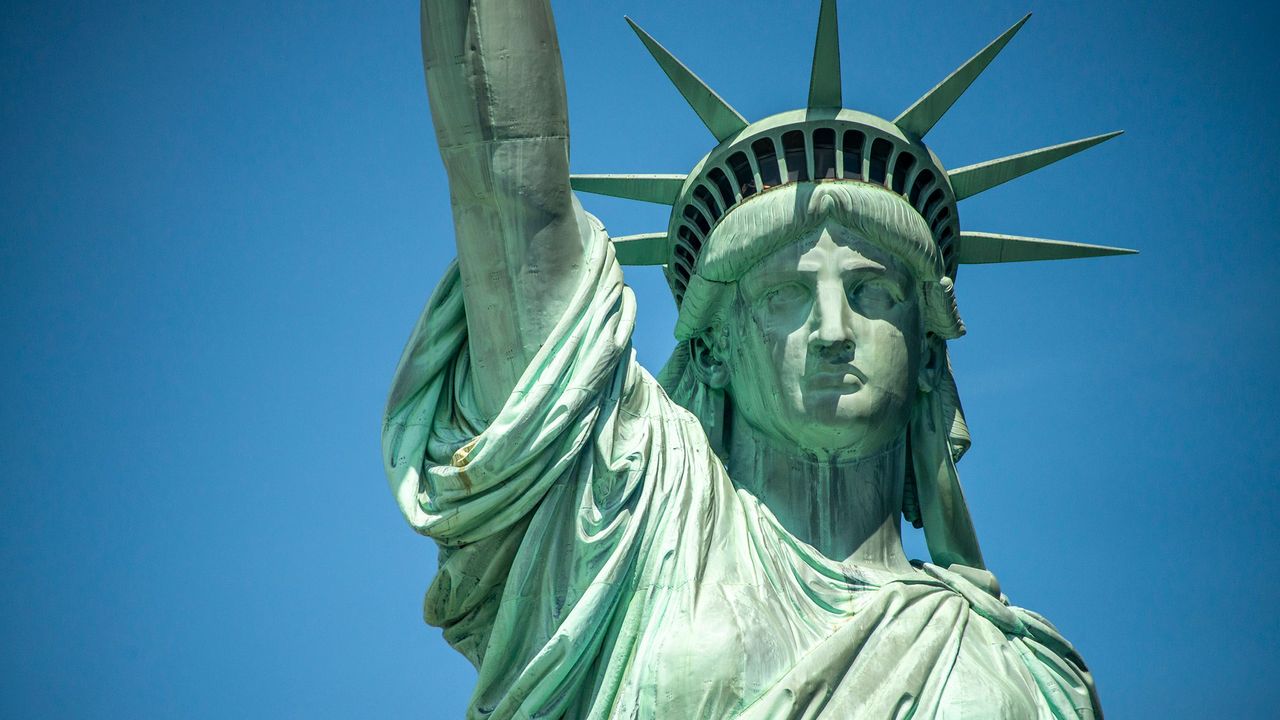

A prominent presence on Liberty Island, the Statue of Liberty has motivated generations with her torch held high and her serious look over the harbor. Though she has traditionally been a symbol of freedom and hospitality, in modern American cultural discussions, she represents more than just a historical landmark. She embodies intricate and frequently opposing concepts that mirror the country’s profound struggles—an icon whose importance both brings together and separates as the United States navigates its sense of identity.
At first glance, Lady Liberty represents ideals most Americans hold dear: liberty, democracy, and the possibility of a new life. Her official name, “Liberty Enlightening the World,” and the sonnet famously inscribed at her base reinforce that message. Immigrants arriving in New York once saw her as a guiding light, and Americans across eras have viewed her as a reminder of national aspiration. Yet today, the statue is also used to spark debate about who counts as an American, what the nation’s commitments should be, and what kind of society the country ought to become.
In recent years, the statue has been at the center of debates concerning immigration. Advocates for more open border practices frequently refer to her as a representation of welcome for foreigners and newcomers, reminiscent of Alfred Lord Tennyson’s renowned quote about accepting “the wretched refuse of your teeming shore.” They believe she urges America to maintain its tradition of hospitality. Conversely, for some, referencing Lady Liberty in these discussions seems either partial or overly simplistic. Critics contend that practical realities and legislation have a greater significance than poetic ideals. To them, the statue serves as a source of inspiration, but not a conclusive directive for policymaking.
However, the symbolic struggle reaches beyond immigration. During conversations regarding racial equality, some perceive the statue as a symbol that liberty should be for all—even while recognizing that America’s past has frequently not lived up to this standard. In various situations—arguments about collective memory, education concerning citizenship, or displays of national pride—the statue turns into a measure of opinion. The way she is represented in educational settings, depicted in the media, or highlighted in public events can reflect wider cultural affiliations.
Complicating matters further, the statue’s symbolism is elastic by design. Created in France and gifted at a moment when the U.S. and French republics celebrated shared republican ideals, it has always served dual purposes—as welcome to immigrants and as tribute to enlightenment values. Over time, successive generations have reshaped her meaning. In one era, she heralded industrial age progress; in another, she stood for anti-war sentiment or civil rights. Today, she endures as a touchstone precisely because she resists being pinned down.
This adaptability, nevertheless, has caused discomfort. When influential entities adopt her image to support political stances, some individuals feel marginalized or inaccurately depicted. For instance, when businesses use her likeness in branding, detractors argue that revered public symbols are being commercialized. When politicians associate with her heritage, adversaries might perceive it as a strategic act instead of a sincere dedication. Every reference modifies her significance, adding new, occasionally conflicting, interpretations.
However, Lady Liberty frequently brings people together instead of causing separation. The public’s reaction to dangers confronting her—from acts of vandalism to growing waves of apathy—usually uncovers a collective motivation to safeguard legacy. Initiatives in education, artistic endeavors, and community events continue to reinforce her importance for the youth. Her likeness persists in mainstream culture, and a lot of Americans still see her as a symbol of optimism and ambition.
In this context, the statue reflects the nation itself: a blend of ideals, challenges, and aspirations. Her complex symbolism provides insights into the changing nature of American principles more than about the statue itself. The cultural debates in which she plays a significant role are, in essence, disagreements about interpretation—what America used to be, what it is now, and what it should evolve into.