

Ford motor company will invest US$3.5 billion in a battery plant for electric vehicles in southwest Michigan that will operate with technology and support from a Chinese manufacturer of batteries that has generated political controversy.
The factory near Marshall, Michigan, will employ 2,500 workers, Ford announced Monday, confirming a Bloomberg report from February 10. The plant will open in 2026 and will produce enough batteries to power 400,000 electric vehicles a year.
The American manufacturer will contract the technical knowledge on batteries to the Chinese company Contemporary Amperex Technology Co. Ltd., who will help set up the plant and will have staff there. Ford said it will own and operate the factory and create a wholly owned subsidiary to run it.
Ford cannot deliver vehicles due to missing logo
“Ford is in control: control over manufacturing, control over production, control over labor,” Lisa Drake, Ford’s vice president of electric vehicle industrialization, said in a meeting with reporters. “We are licensing that technology from CATL.”
The agreement, intended to guarantee tax benefits for the plant, has generated criticism at a time of heightened geopolitical tension between the United States and China. Virginia Gov. Glenn Youngkin removed his state from consideration as the location of the factory, calling it a “Trojan horse” of the Chinese Communist Party.
CATL staff will help set up the factory’s equipment to build the batteries, some of which will come from China, according to Drake. And some of those CATL people will be upgrading at the Michigan factory permanently because “we need their help,” Drake said.
The United Auto Workers union said in a statement that it hopes the plant will create “good-paying union jobs.”
At a ceremony Monday in Michigan to announce the factory, Chief Executive Bill Ford, the great-grandson of founder Henry Ford, characterized his company’s relationship with the Chinese battery maker as a way to foster American autonomy in battery manufacturing. batteries for electric vehicles, which now come mainly from Asia.
“Making these batteries in the US will bring us closer to battery independence,” Ford said. CATL “will help us catch up so we can build these batteries ourselves.”
Ford returns to Formula 1
provide technology
CATL, the world’s largest battery maker, is contributing the technology for cheaper lithium iron phosphate batteries that will make Ford’s range of electric vehicles more affordable, according to Drake. The plant will be the first in the US to produce so-called LFP batteries.
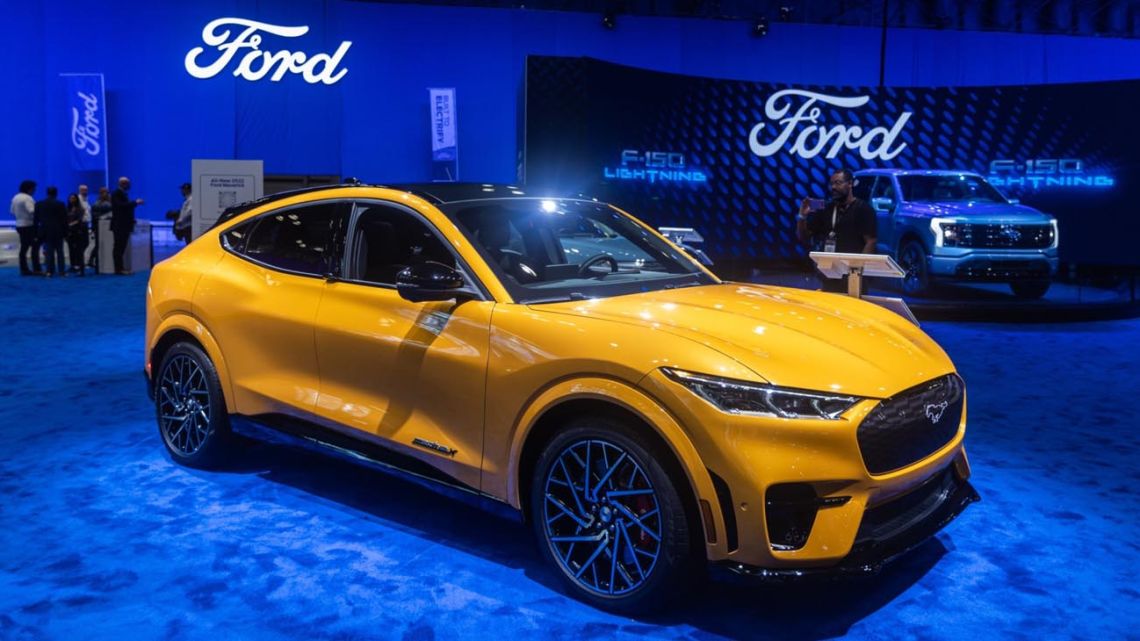
Ford will start offering LFP batteries in its Mustang Mach-E model later this year and in its F-15o Lightning plug-in truck next year. Initially, those batteries will be imported from China. Tesla Inc. and Honda Motor Co. also have contracts with CATL to import LFP batteries for their electric vehicle models.
The Michigan facility will have the annual capacity of produce 35 gigawatt hours of LFP batteries, enough to power 400,000 Ford models a year, Drake said. This will represent about a fifth of the production of 2 million electric vehicles per year that Ford has targeted by the end of 2026. Ford is investing $50 billion to develop and manufacture electric vehicles through 2026.
By equipping much of its EV lineup with more affordable batteries, it will help the automaker achieve the sales volume it needs to achieve its goal of an 8% margin on EV earnings before interest and tax. in 2026, Drake said.
Ford is currently losing money on its line of electric vehicles, which helped contribute to disappointing earnings last year that will likely lead to further job cuts.
Ford warns of a $1 billion increase in costs due to inflation
tax credits
Ford believes batteries produced at the factory will qualify for production tax credits under the Inflation Reduction Act passed by Congress last year that seeks to encourage domestic production of electric vehicles and batteries.
However, consumers who buy Ford electric vehicles with batteries produced at the Michigan plant will not be eligible for the full $7,500 tax credit, according to Marin Gjaja, head of sales and marketing for Ford’s electric vehicle business. Instead, you can opt for a $3,750 credit because the vehicle is made in the US, but the battery materials are not locally sourced. According to Gjaja, commercial clients and landlords are eligible for the full US$7,500 tax rebate.
“I think over time we will see if we qualify for the full $7,500 based on the origin of the minerals, and that is something the team is still working on,” Gjaja told reporters.
You may also like