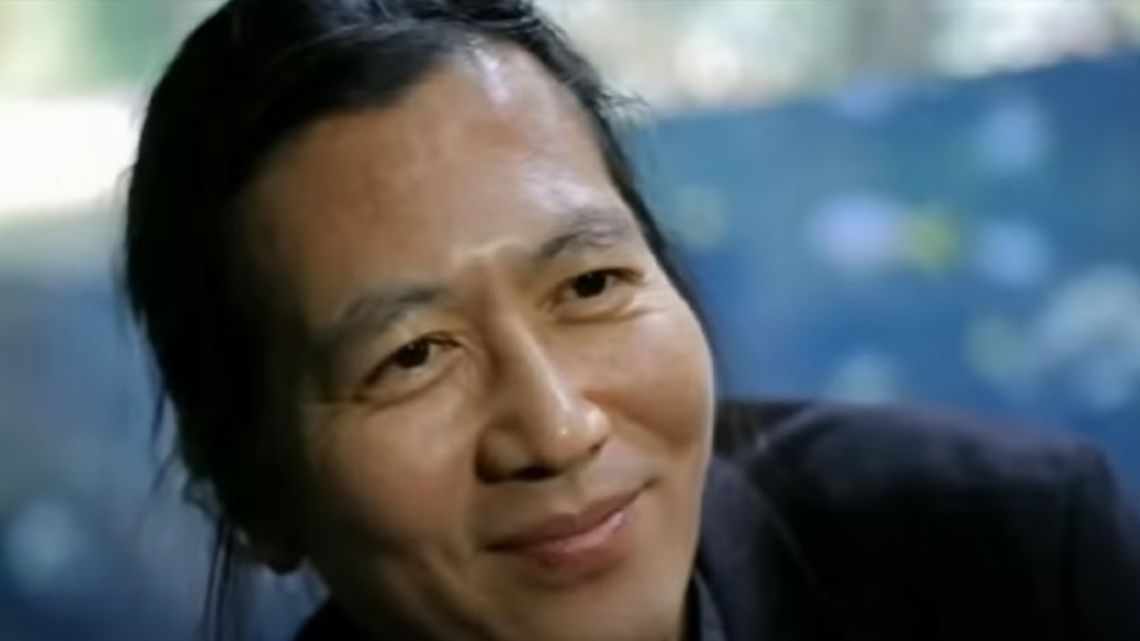

byung chul han (Seoul, 1959), professor at the Berlin University of the Arts, is one of those thinkers who assumes how to alert his contemporaries of the risks inherent to the times in which they livetradition that, somehow, traveled both Plato with his diatribes against the sophists and nietzschetearing down idols
Although he does it in a somewhat tremendous and exaggerated way, perhaps because he feels that way or because he believes that, with that high-sounding way, his criticisms will be better or sooner heard.
as well as in Infocracy warned about the tyranny of data and in No-Things the loss of things that make worldliness, in his latest book, contemplative lifewhich has as subtitle praise of inactivityHe maintains that to the extent that “we are becoming more and more like those active people who roll like the stone rolls, according to the stupidity of mechanics…”, the magic and temporality of inactivity has been lostthat it has its own “fund of splendor of human existence”.
Han is not very far from the Hellenistic Epicureans; what he is doing is proposing formulas to obtain and preserve happiness, the constant human search for eudaemonia.
For this reason, in the face of the fully active life of the capitalist relations of production -the active life Delaware the human condition of Arendt–, proposes to rescue truly free time, “which does not belong to the order of work and production.” (Han).

Han argues that “the true happiness it is due to the vain and useless, to the admittedly impractical, to the unproductive, to the detour, to the excessive, to the superfluous, to the forms and to the beautiful gestures that have no utility and serve no purpose”. the figure of flâneur that Benjamin rescues from Baudelaire would be the most accurate representation, although partly stereotyped, of that “freedom with respect to purpose and utility”.
Somehow, Han continues with a philosophical line, an ethics of conduct that Socratic philosophers already supported; Plato is Republic says that an optimal life is one dedicated to contemplation of the truthsthat is to say, the transcendent Ideas.
Throughout his book, of barely 120 pages, Han points out the dangers and evils that he believes are generated by what he calls “the obligation to act”: the extinction of freethinkers, the rule of the provisional, the short-term and the inconstant, the loneliness and distance from consumers, the loss of capacity to be expected, the substitution of experience for lived experience, limitless connectivity that weakens the link of the being with another and that finally leads to a loneliness that is difficult to return to.
The theme raised allows him a fruitful dialogue with Heidegger, in whose tradition he is inserted; she harshly discusses and criticizes Hannah Arendt, also the latter due to the reductionist vision of society held by the German philosopher, for whom only the political has room.
A Heidegger after being and time allows him to say that “after the twist, Heidegger comes to the conclusion that it is only inactivity such as partying and playing that gives splendor to human life…” and that “there are traces of thought in Heidegger that are condensed into a ethics of inactivity…”, whether at the interpersonal level of the Dasein as with his relationship with nature. (Han, 60).
have reflected on science and meditationconference that Heidegger gave in 1953 and says “Inactive meditation is related to the magic of the there that is beyond all action. His steps…allow us to reach the area where we already find ourselves. In the radical immanence of it, this there is too close to us, so that we overlook it over and over again. …Whoever is only active skips it inevitably. It only reveals itself to the inactive, contemplative pause” (Han, 48).
De todas formas, Han does not completely anatheminate the active life“which undoubtedly has its validity and its own legitimacy, but has its ultimate goal, according to Thomas Aquinas, in the happiness of serving the contemplative life” (Han, 70) and, later on, “human life is fulfilled only in the compound life, that is, in the collaboration between the active life and the contemplative life” (Han, 105)
Surely he does not forget an undoubtedly active character, a soldier who fought under the orders of Prince Maurice of Nassau and the Duke of Bavaria, and who, in a moment of rest during the course of the 30 years’ war, remaining “the whole day alone, sitting next to a stove with all the tranquility to surrender to my thoughts…”: -clearly a anthem of inactivity– “that initiates us into the mystery of life” (Han) inaugurating modernity, with its Method Discourse. Heraclitus would confirm the agreement of opposites.
The last chapter of the book is titled The society that will come and is dedicated, not for free, to Novalis -Georg Philipp Friedrich von Hardenberg- German poet, precursor of romanticism and where the nihilism that up to that moment was sustained is abandoned and, luckily, a path of light is glimpsed.
Han says that the current crisis of religion “could not be attributed to the fact that we have lost all faith in God or that we have become suspicious of certain dogmas” but, due to the already questioned hyperactivity, man has lost the contemplative capacity: the soul no longer prays, the soul produces itself, “the crisis of religion is a crisis of attention” (Han, 107)
In any case, Han clarifies that the essence of religion is not God, since a religion without God can be conceived; The important thing for the philosopher is “the desire for the infinite that is fulfilled in the intuition of the universe”.
In a society devoted entirely to vita activa, to the society of ignorance, Innerarity would say, it would seem that action and contemplative intuition are incompatible, at least that is how Schleiermacher sees it in about religion; the verb “listen” of religion and the verb “act” of history do not find a bed to share.
Listening is getting lost, surrendering to the whole of nature; on the other hand, who only acts, only produces, is incapable of listening; “In the era of permanent narcissistic self-production and self-enactment, religion loses its foundation since detachment from oneself is a constitutive act of religious experience” (Han, 109).
The answer lies for Han in the reconciliation of man with nature: “We violate nature from the moment we consider it a means for a human goal, a resource. The romantic understanding of nature has the potential to make us revise our instrumental link with it, which leads inexorably to catastrophes. (Han, 110)
This taking of a position justifies the dedication in favor of Novalis and the extensive quotes he makes from him and from Hölderlin, another romantic; on the other hand, the influence of stoicism, in regards to the man-nature relationship, is also evident.
Finally, the book and its fervent defense of the contemplative lifein a kind of paraphrase of the Novalis of the coming society, it culminates with a message, urbi et orbi, and therein lies the hope for a harmonious life:
“In the kingdom of peace to come, man and nature will be reconciled. The human being will no longer be more than a fellow citizen of a republic of living beings to which the plants, animals, stones, clouds and stars will belong.
You may also like