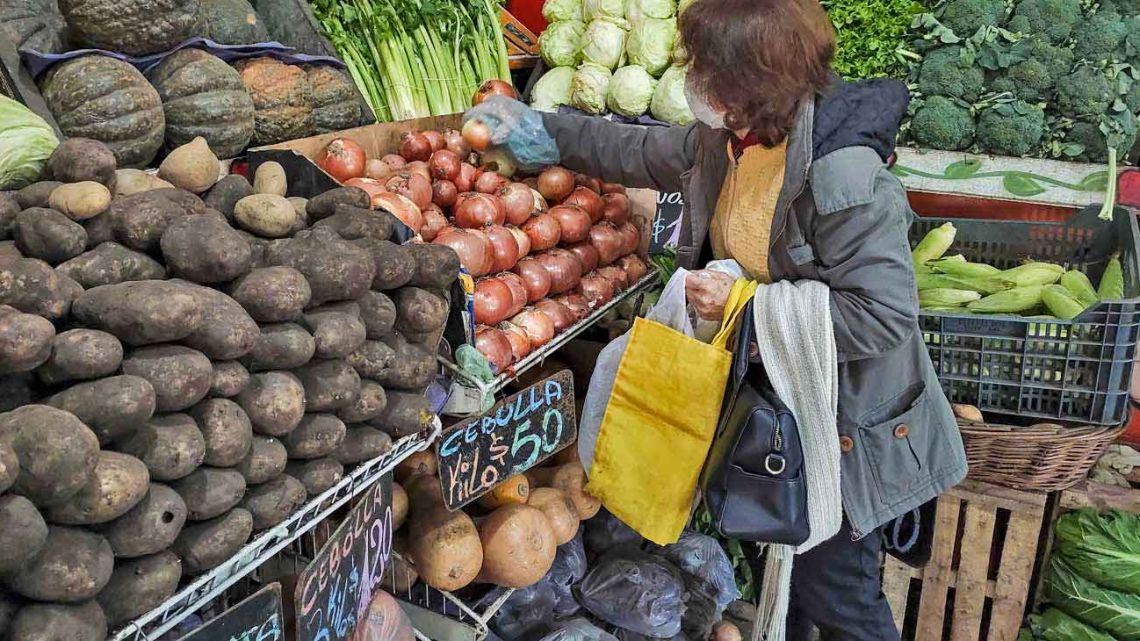

Potato rose 24.7% in June and continued to rise in July. Producers consulted by PROFILE warned that, as a result of the drought, these prices will continue to rise, and that very possibly between October and November production will not be enough to supply demand.
The product was the one that increased the most in the Food category, and July was predicted with the same trend. This month, the Ministry of Commerce renewed the basket of Fair Prices for fruits and vegetables with an increase of 39.1% in potatoes compared to June.
Through a statement, the Argentine Fruit and Vegetable Union (UFHA) expressed its concern. “The scarcity of rains and the lack of water have left a marked mark on potato production, decreasing both the quality and quantity of the crops,” they said.
As Omar Carrasco, president of UFHA, told PROFILE, “potato production is declining” and yields are very low. “One hectare used to yield 1,800 bags of potatoes and today it is 800,000 bags.” Carrasco added that this is added to the loss in quality and the reduction in the size of the product, and explained that this has to do with the lack of water. “What is expected is that in October or November the situation will be more critical,” he added. The statement also warns that the situation is not new. “During the last eight years, the potato sector has faced a decline in production,” something that, they point out, “has also influenced the price of potatoes.”
Due to the increase in costs, which were managed in dollars, “many producers abandoned production and dedicated themselves to something else,” Carrasco explained. “There are also others who have planted half: of a thousand hectares, 500; and 100, 50”, he explained.
For Juan Manuel Ferreiro, president of the Tandil Potato Producers Center, beyond the drought and the increase in costs, the greatest difficulties are getting the right fields and seeds. “There is not the same amount of seeds as last year,” he said. This forces many producers to look for alternatives that can affect production, since it is a very sensitive product. “These are crops that need land with four or five years of rotation,” added Ferreiro.
“According to the perspective of the producers in the eastern zone, it is not a bad year”, or not worse than last year, commented the representative of the Tandil producers.
“The potato arrived about ten years ago, a decline due to weather conditions and marketing,” something that caused “many to drop production.”
According to the document released by UFHA, “experts in the field fear that the situation will worsen further in the coming months.” Due to the effects of the drought and lower yields, they expect “a significant impact on the supply of potatoes,” they concluded.
“If fewer potatoes enter, the merchandise goes up,” Carrasco summarized. “At this moment in Córdoba, part of Buenos Aires, Santa Fe and Mendoza this situation is being suffered.”
According to the latest data from the Argentine Confederation of Medium Enterprises (CAME), in May the prices between origin and destination of the potato multiplied 2.5 times, something that is due “to the decrease in supply”, since ” in the producing areas of the southeast of Buenos Aires there were heavy rains that prevented harvesting”.
According to INDEC figures, a kilo of potatoes cost $313.80 on average in June. According to a survey by PROFILE, in July prices in supermarkets start at $499, and, if Fair Prices are achieved, at $249.
Juan Martínez is a horticultural producer in Mendoza and foresees production that, in the coming months, and waiting for the new one in October, prices will continue to rise. “People should go for squash, which is cheaper, and replace potatoes, he concluded.
The increase has to do with a “combo of drought, frost and inflation,” added the producer.