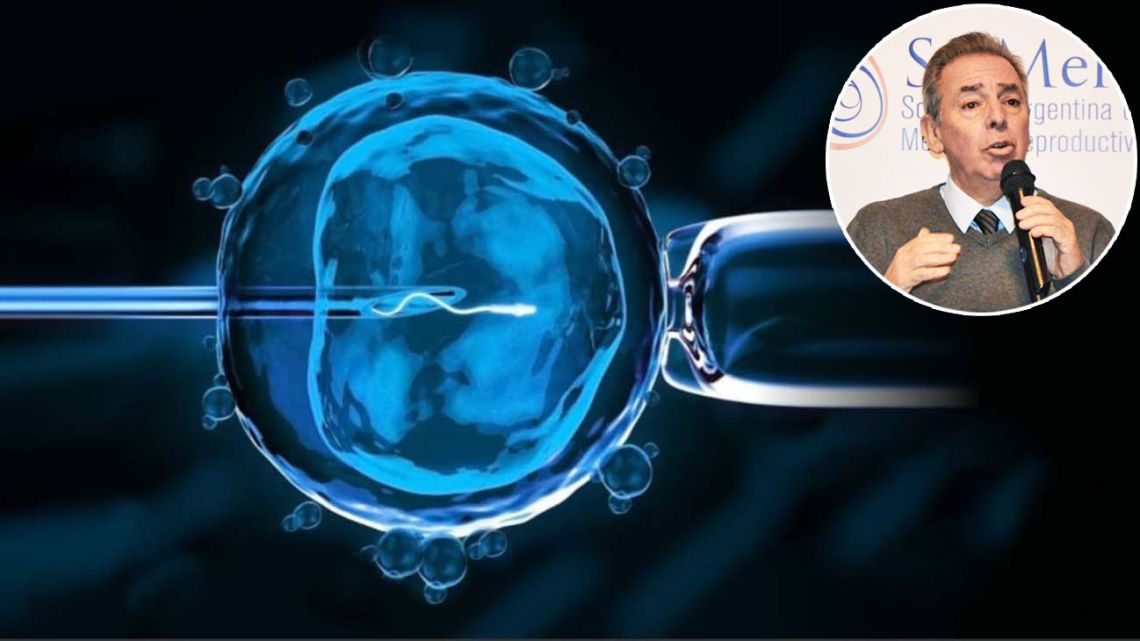

In almost all developed countries, for various reasons, future maps plan and choose postpone –sometimes for many years–, that of the children. But, to preserve the best chances of procreation, the number of women, and couples, who choose to preserve their eggs is growing.
In Argentina, according to specialists, the freezing of eggs It is already growing at a rate of 20% per year.
“This situation of postpone conception is a relatively social phenomenon recent, of the last decades. However, what of course does not change is the age at which women have their greatest reproductive capacity. This is between 20 and 30 years of age”, explains Gabriel fiszbajn, specialist in reproductive medicine. However, the experts in this matter who are gathered in the Argentine Society of Reproductive Medicine (SAMeR)) state that couples are increasingly delaying their family planning, generally for reasons related to the work and professional development of the parents.
As detailed to PROFILE Dr. Agustín Pasqualini, current vice president of SAME: “he A woman’s fertility peak occurs around the age of 33.. From that moment on, he not only begins to decline their fertility but also begins to increase the risk of the baby being born with some chromosomal alteration.
This creates a problem, because according to Dr. Fabián Lorenzo, director of SAMeR, “currently, couples where the woman is around 38 years old often come to consult us to “seek” a pregnancy. And if they later want to ‘look for’ a brother we are already talking –on average– of women of around 41 years of age. This implies that their ovarian reserve is already diminished and their biological capacity to become pregnant is minor.”
But as a counterpart to this social trend, experts notice a sustained increase in the number of people who choose to resort to various fertility techniques actually.
According to the statistics provided by the main centers specialized in these options, the number of people who choose to “freeze” their reproductive cells increases by around 20% each year. This figure is not easy to translate, but from SAMeR they calculate that, every year, between 3,000 and 5,000 Argentines decide to freeze their gametes to retain the possibility of being biological parents later.
In addition, it is also Changing the time to make this decision. As Fiszbajn, president of SAMeR, told PROFILE“in 2010 the average age of people who wanted to”save save‘His genetic material was 38 years old. today that age It dropped to an average of 35 years. However, still today 60% of women who seek to preserve their reproductive tissues arrive for the first consultation at ages older than what is recommended so that the possibilities are optimal”.
And this downward trend is not enough, since experts warn that, from the beginning of the fourth decade of life, fertility begins to decline gradually, but constant.
It is that, despite all the techniques available today in reproduction centers, the reality is that, from the age of 40, statistics indicate that the chances of a woman getting pregnant with her own ovules are around 15%. ”.
For this reason, if it is decided cryopreserve In order to maintain the possibility of becoming pregnant years later, it is also advisable to “freeze” this reproductive material before the age of 33, since this increases the later chances of being a biological mother.
Costs of these practices
The freezing process that is booming No it is precisely economical. Although each institution is different, the average cost of freezing eggs is currently around US$1,400. To this must be added an annual maintenance sum of around US$ 150.
However, in general the costs of these practices are not covered by obras sociales or prepaid and there are no fertilization services in state institutions.
There are, yes, a handful of situations where the reproductive health law establishes that the payment of the service corresponds to health insurance: It is in the cases of people who want to freeze reproductive tissues before any intervention that may affect them. The typical case is that of women or men who must undergo certain oncological treatments and, in this way, can preserve the reproductive possibility.
boys lose too
As detailed to PROFILE the doctor Agustin pasqualinicurrent vice president of the Argentine Society of Reproductive Medicine (SAME): “the peak of fertility for women is around 33 years of age. From that moment on, not only did her chances begin to decline, but the risk of the future baby being born with some chromosomal alteration also began to rise.
For his part, the male has a few more “reproductive” years. But You are not immune to this situation either.. In men, from the age of 45 and especially from the age of 50, their sperm count begins to decrease,” explained Pascualini. “This does not mean that he cannot be a father –even at much older ages–, but that the odds are going to fall.
In both genders it is possible to freeze gametes to use them in some assisted reproduction procedure years later.
In those cases the viability of the frozen samples is long. There are examples of cases of pregnancies achieved with ovules and sperm frozen for nearly three decades.
growing numbers
◆ Infertility: no pregnancy after 12 months of sexual intercourse without using contraceptives.
◆ According to the WHO in the world there are 186 million people and 48 million couples with fertility problems.
◆ A baby has two million follicles. At puberty it adds up to about 400 thousand. But between 400 and 500 will reach maturity and ovulate.
◆ In Argentina there are about 92 thousand frozen embryos (data from 2020).
◆ Vitrification consists of ultra-rapid freezing of oocytes that are kept in liquid nitrogen at a temperature of -196ºC.