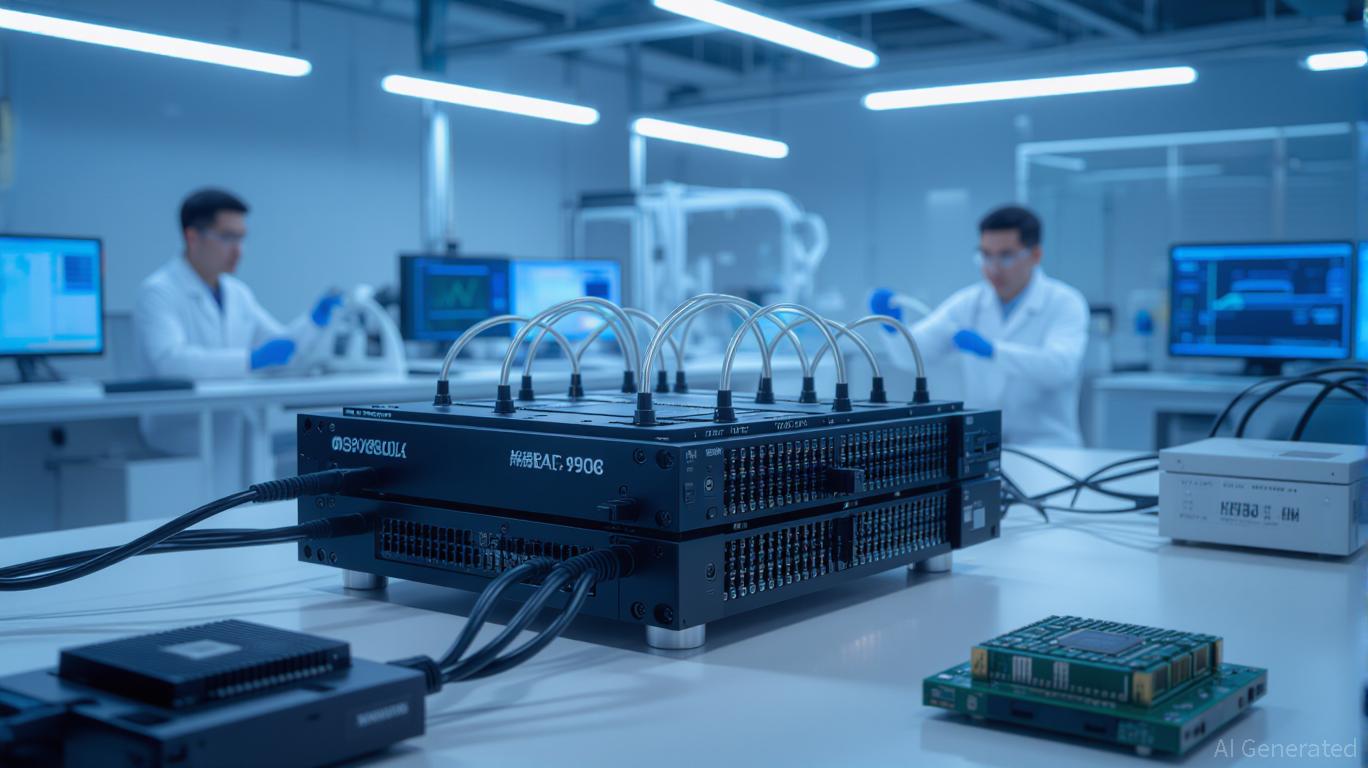
The world of computing is on the brink of a transformation that could surpass even the current excitement around artificial intelligence. Emerging technologies promise to redefine how we process information, store data, and interact with machines.
Beyond AI: the next frontier in computing
While artificial intelligence has captured significant attention and funding in recent years, specialists caution that the subsequent major transformation in computing could emerge from entirely distinct breakthroughs. Quantum computing, neuromorphic processors, and cutting-edge photonics are some of the technologies positioned to profoundly reshape the realm of information technology. These developments offer not only enhanced processing capabilities but also fundamentally novel approaches to tackling challenges that conventional computers find difficult to resolve.
Quantum computing, in particular, has attracted global attention for its ability to perform complex calculations far beyond the reach of classical machines. Unlike traditional computers, which use bits as ones or zeros, quantum computers rely on qubits that can exist in multiple states simultaneously. This capability allows them to process massive datasets, optimize complex systems, and solve problems in cryptography, materials science, and pharmaceuticals at unprecedented speed. While practical, large-scale quantum machines remain in development, ongoing experiments are already demonstrating advantages in specialized applications such as molecular modeling and climate simulations.
Neuromorphic computing represents another promising direction. Inspired by the human brain, neuromorphic chips are designed to emulate neural networks with high energy efficiency and remarkable parallel processing capabilities. These systems can handle tasks like pattern recognition, decision-making, and adaptive learning far more efficiently than conventional processors. By mimicking biological networks, neuromorphic technology has the potential to revolutionize fields ranging from robotics to autonomous vehicles, providing machines that can learn and adapt in ways closer to natural intelligence than existing AI systems.
The emergence of photonics and novel computing paradigms
Photonics, which involves leveraging light for computational tasks, is emerging as a compelling substitute for conventional silicon-based electronic systems. Optical computing offers the capability to transmit and process information at light speed, thereby minimizing delays and power usage while substantially boosting bandwidth. This innovation holds significant promise for applications in data centers, telecommunications, and scientific inquiry, sectors where the sheer volume and rapid flow of data are expanding at an unprecedented rate. Businesses and academic bodies globally are actively investigating methods to merge photonics with existing circuitry, with the goal of developing integrated systems that harness the advantages of both approaches.
Other unconventional approaches, such as spintronics and molecular computing, are also emerging. Spintronics leverages the quantum property of electron spin to store and manipulate data, potentially enabling memory and processing capabilities that surpass current hardware. Molecular computing, which uses molecules to perform logic operations, offers the prospect of miniaturizing components beyond the limits of silicon chips. These technologies remain largely experimental, but they highlight the breadth of innovation underway in the pursuit of computing beyond AI.
Implications for industry and society
The impact of these new computing paradigms will extend far beyond laboratory research. Businesses, governments, and scientific communities are preparing for a world where problems previously considered intractable can be addressed in hours or minutes. Supply chain optimization, climate modeling, drug discovery, financial simulations, and even national security operations stand to benefit from faster, smarter, and more adaptive computing infrastructure.
The race to develop next-generation computing capabilities is global. Nations such as the United States, China, and members of the European Union are investing heavily in research and development programs, recognizing the strategic importance of technological leadership. Private companies, from established tech giants to nimble startups, are also pushing the boundaries, often in collaboration with academic institutions. The competition is intense, but it is also fostering rapid innovation that could redefine entire industries within the next decade.
As computational methods advance, they might also transform our understanding of how humans and machines interact. Sophisticated system designs could facilitate devices that grasp context with greater insight, execute intricate logical processes instantly, and foster cooperative issue resolution across diverse fields. In contrast to today’s artificial intelligence, which largely depends on pre-existing models and extensive data collections, these emerging innovations offer more fluid, adaptable, and effective answers to various difficulties.
Navigating the Future: Computing in a Post-AI Era
For both enterprises and government bodies, the advent of these technological advancements brings forth a dual landscape of prospects and hurdles. Businesses will be compelled to re-evaluate their IT infrastructure, allocate resources for staff development, and seek collaborations with academic entities to harness pioneering breakthroughs. Concurrently, governments are tasked with devising regulatory structures that guarantee ethical deployment, robust cybersecurity, and fair distribution of these revolutionary technologies.
Education will also be a crucial factor. Equipping the upcoming cohort of scientists, engineers, and analysts to engage with quantum systems, neuromorphic processors, and photonics-driven platforms will necessitate substantial revisions to academic programs and skill acquisition. Interdisciplinary expertise—merging physics, computer science, materials science, and practical mathematics—will be indispensable for individuals entering this domain.
Meanwhile, ethical considerations remain central. New computing paradigms could amplify existing inequalities if access is limited to certain regions or institutions. Policymakers and technologists must balance the drive for innovation with the need to ensure that the benefits of advanced computing are broadly shared across society.
The future of AI and its implementations
Although artificial intelligence continues to draw worldwide interest, it represents just one facet of a broader surge in technological progress. The upcoming computing epoch could redefine machine capabilities, ranging from tackling complex scientific challenges to developing adaptable, brain-like systems that learn and evolve autonomously. Quantum, neuromorphic, and photonic innovations stand at the forefront of this transformation, promising levels of speed, efficiency, and functionality that surpass current digital paradigms.
As the boundaries of possibility expand, researchers, industries, and governments are preparing to navigate a world where computing power is no longer a limiting factor. The next decade could witness a seismic shift in technology that changes how humans interact with information, machines, and the environment—an era where computing itself becomes a transformative force, far beyond the shadow of AI.