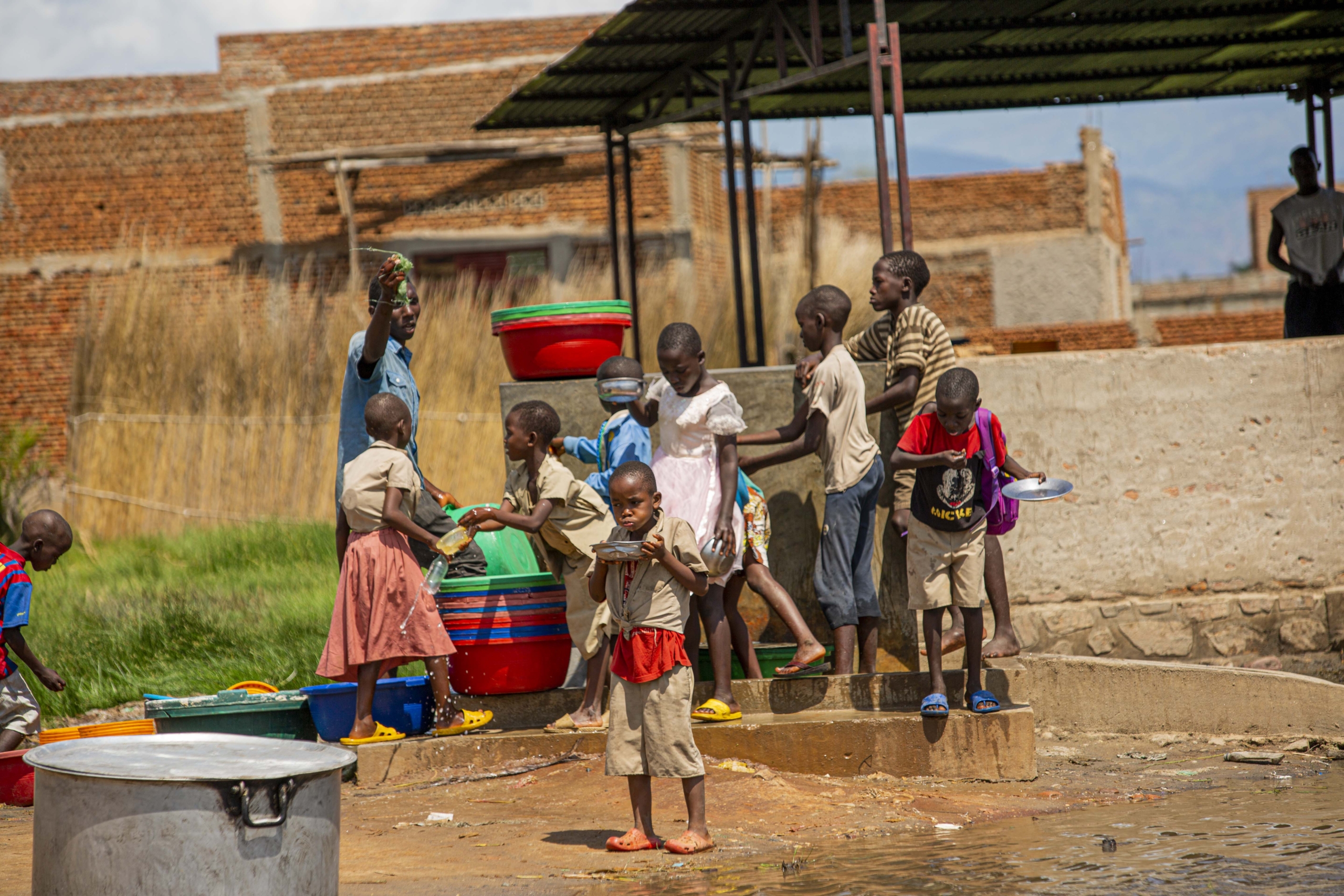

Contextualizing CSR initiatives within Burundi’s food sector to support nutrition and climate resilience
- Socioeconomic and nutritional landscape — Burundi is among the world’s poorest countries. Most households depend on smallholder farming for food and income. Child malnutrition is a persistent challenge: historically, widely cited surveys have shown stunting rates among children under five that place Burundi among the countries with the highest burdens of chronic malnutrition. Micronutrient deficiencies, seasonal food gaps and limited dietary diversity are common in rural and urban poor areas alike.
- Climate vulnerability — Burundi’s agriculture is highly exposed to climate variability. Smallholder systems are sensitive to erratic rains, localized floods and droughts, soil degradation and deforestation. These shocks reduce yields, disrupt markets and worsen household food security.
- Private sector opportunity — Food-sector companies — from input suppliers, traders and processors to retailers and exporters — are uniquely positioned to address both immediate nutrition deficits and long-term climate resilience through corporate social responsibility (CSR) programs and inclusive business models. In Burundi, private actors often implement CSR in partnership with NGOs, multilateral agencies and donors.
How food-sector CSR improves nutrition and climate resilience: mechanisms and pathways
- Inclusive sourcing and farmer support — Buyers working with smallholder producers can provide agronomic training, climate-smart methods, essential inputs and storage solutions to boost earnings and secure supply stability. Higher incomes broaden household food access, while stronger agronomy enhances productivity and resilience against climate-related shocks.
- Nutrition-sensitive value chains — Companies may diversify or reformulate products, encourage home gardening and finance school or community feeding initiatives to elevate dietary quality. Fortification and product variety help increase micronutrient intake without requiring substantial shifts in consumer behavior.
- Water stewardship and sanitation — Food processors that minimize water consumption, safeguard local watersheds and invest in community water infrastructure can reduce production risks while simultaneously improving household health, a core driver of nutritional well-being.
- Post-harvest loss reduction and storage — Funding for drying facilities, hermetic storage, cold-chain systems and aggregation hubs helps maintain food stocks during lean periods, stabilize prices and curb seasonal surges in malnutrition.
- Climate-smart finance and insurance — CSR initiatives can underwrite index-based insurance trials, extend loans for smallholder adaptation needs such as drought-tolerant seeds or composting tools, and provide credit guarantees for climate-resilient investments.
- Public–private partnerships for seeds and biofortification — Private seed companies and processors can expand nutrient-rich crop varieties, including biofortified beans and vitamin-A sweet potato, in collaboration with NGOs and research institutions, aligning supply with market demand and reinforcing community nutrition efforts.
Notable CSR examples and frameworks implemented in Burundi
- Inclusive sourcing with premium reinvestment — Several coffee and tea exporters working in Burundi channel price premiums and sustainability payments back into cooperative-level investments: training on soil conservation, diversification into vegetables and legumes, and community nutrition programs. These initiatives improve farmer incomes and enable seasonal food purchases while promoting crop practices that reduce erosion and improve water retention.
- Processor-led water stewardship and community health — Food and beverage processors operating in Burundi have partnered with government agencies and NGOs to rehabilitate local water points and promote household sanitation. These activities reduce water-related crop losses, lower disease burden that undermines nutritional status, and demonstrate how company water efficiency investments produce shared benefits for resilience.
- Dairy value-chain upgrades — Local dairy processors and collection centers supported by donor co-financing have introduced basic chilling infrastructure, training on animal feeding and fodder systems, and cooperative governance. Improved milk quality and reduced spoilage raise farmer incomes and provide households with a nutrient-rich food source (milk and dairy products), strengthening dietary diversity and resilience to shocks.
- Biofortification and seed-system linkages — Projects that pair research agencies and NGOs with private seed multipliers have promoted nutrient-dense crop varieties. Where companies help commercialize these varieties and connect them to market outlets (local processors, traders, school feeding), adoption accelerates and micronutrient intake improves among vulnerable groups.
- Post-harvest storage and market access — CSR investments in aggregation centers, solar dryers and hermetic bags reduce losses for maize, beans and groundnuts. By smoothing supply over the season, these measures reduce food price spikes and the seasonal rise in malnutrition, while improving farmer negotiating power with buyers.
- Private support for climate-smart agriculture (CSA) — Agribusinesses have sponsored farmer field schools and demonstration plots showing erosion control, agroforestry, conservation agriculture and crop rotations. When combined with nutrition education, CSA increases both yield stability and the availability of diverse foods at household level.
- Nutrition in value-chain employment — Some processors and exporters embed nutrition-sensitive workplace programs — fortified school meals for workers’ children, lactation support and nutritional screening — improving community nutrition indirectly through employer-led social services.
Evidence of impact and quantifiable results
- Income and food security — Sourcing programs and aggregation services typically increase farmer incomes by reducing post-harvest losses, improving product quality and providing market access. Higher, more stable incomes translate into improved household food availability and purchasing power during lean seasons.
- Dietary diversity and micronutrient intake — Nutrition-sensitive CSR (home garden kits, biofortified crops, school feeding) raises consumption of vegetables, legumes and nutrient-dense staples. Monitoring in comparable East African contexts shows gains in dietary diversity scores when private-sector distribution channels are engaged.
- Resilience to climate shocks — Climate-smart farming advice and resilient inputs delivered through CSR reduce yield variability. Post-harvest infrastructure limits loss from extreme weather, while watershed protection projects by companies decrease local flood and erosion risks.
- Community health indicators — Investments in water and sanitation by food companies lower diarrheal disease incidence, an important driver of child undernutrition. Where companies coordinate with health partners, screening and referral for acute malnutrition have improved coverage.
Key challenges and constraints
- Scale and fragmentation — Numerous CSR efforts function on a project-by-project basis and engage only small groups of farmers or communities, and expanding their reach calls for tighter coordination among buyers, processors and public institutions.
- Measurement and attribution — Clearly showing direct effects on stunting or micronutrient levels is demanding and costly, so many CSR initiatives prioritize tracking deliverables such as trainings or infrastructure instead of concrete nutrition improvements.
- Market linkages and demand — To keep biofortified or diversified crops appealing, companies need dependable market pathways; without them, farmers often shift back to staple cash crops that guarantee stronger commercial demand.
- Political and logistical risks — Working in Burundi may entail governance challenges, transport and energy shortages and seasonal accessibility issues that raise operational expenses and make CSR implementation more difficult.
Good practices for high-impact CSR in Burundi’s food sector
- Design for nutrition and resilience jointly — Embed dietary goals within supply-chain efforts by pairing agronomic upgrades with nutrition awareness, household gardens and backing for nutrient-rich crops.
- Partner strategically — Draw on NGOs, research bodies and multilateral organizations for knowledge in nutrition, biofortification, climate adaptation and monitoring, while relying on private-sector networks to scale.
- Invest in infrastructure with sustainability plans — Cold chains, drying facilities and water systems should feature business models or maintenance frameworks developed alongside communities and local authorities to secure long-term operation.
- Measure outcomes, not just activities — Monitor indicators such as dietary diversity, market earnings, post-harvest reduction and resilience across seasons; when possible, bolster nutrition surveillance and thorough evaluations to understand effective approaches.
- Create incentives for adoption — Offer price incentives, credit access, bundled inputs and assured offtake to make climate-smart and nutrition-focused practices financially appealing to farmers.
- Scale through buyer networks — Coordinated buyers aligning on standards, training and market-building can distribute costs and broaden access far beyond individual cooperative spheres.
Roles within policy and the supportive environment
- Government facilitation — Public policy can spur private CSR efforts by extending matching grants, offering tax benefits for nutrition and climate-related ventures, and simplifying authorization processes for public–private collaboration.
- Standards and certification — Embedding nutrition and climate metrics within procurement criteria encourages companies to commit resources toward demonstrable performance improvements.
- Finance and risk-sharing — Donors and development banks may reduce the risk of private capital directed at rural infrastructure and test insurance mechanisms that help bring corporations into these initiatives.
- Burundi’s food sector confronts a twin challenge: alleviating persistent malnutrition while bolstering smallholder farmers’ capacity to manage escalating climate pressures. Corporate entities play a distinct role by connecting market-driven incentives, logistics and financial resources with on-the-ground nutrition and climate adaptation initiatives. When CSR shifts from isolated donations to integrated, nutrition-focused value-chain investments — informed by farmer feedback, supported by technical partners and evaluated through clear health and resilience indicators — it can generate lasting gains: improved earnings, steadier and more diverse food supplies and lower post-harvest losses,