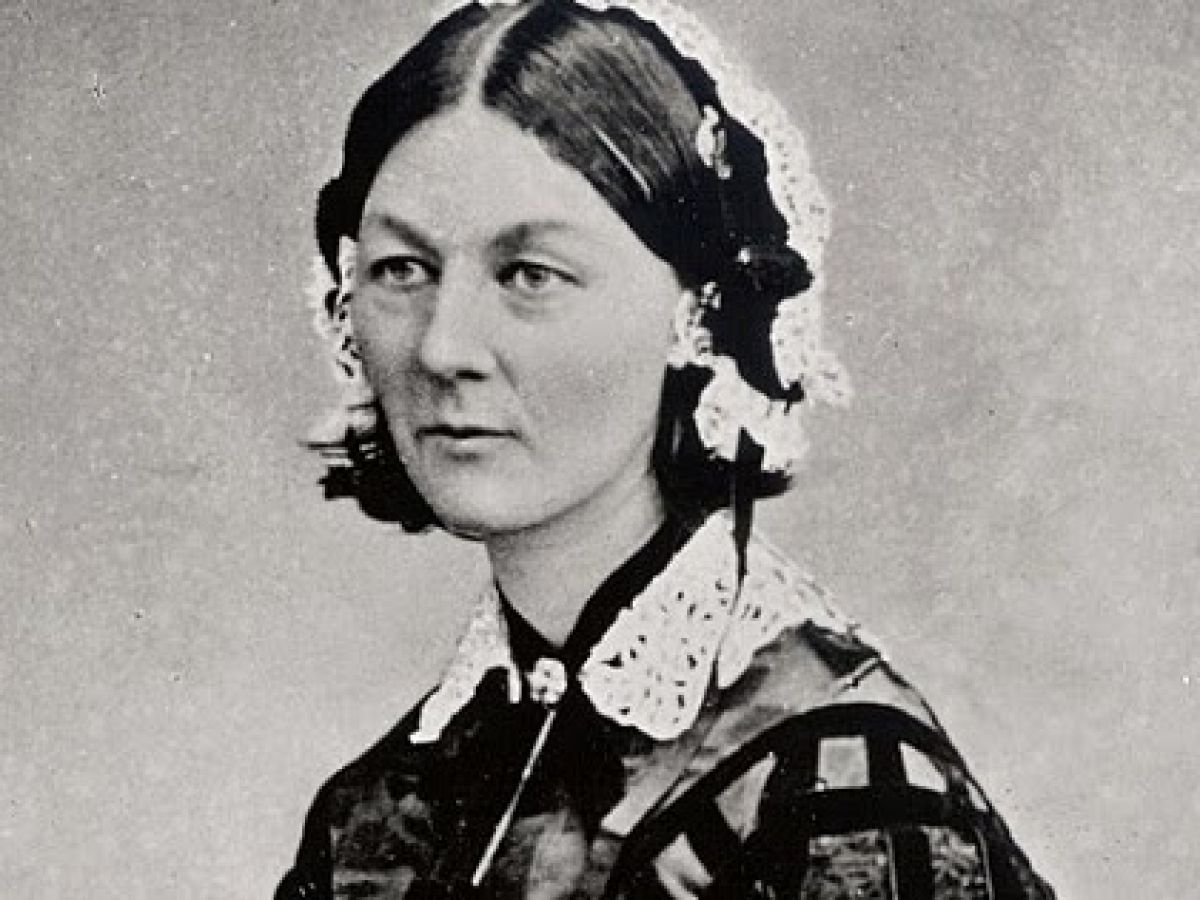

On May 12, 1820, Florence Nightingale, a nurse, health care reformer, and philanthropist, was born in Florence, Italy.
Florence Nightingale was born into a wealthy family in Italy.
However, she rejected that life of social comfort to work as a nurse from 1844.
At that time, the working conditions in this work were extremely precarious and the lack of health caused a large number of deaths.
Nightingale, when undertaking this challenge, must face his family and the social mandates of the time.
Motivated by her desire for independence and her religious convictions, she found in nursing a profession that helped her be useful to others.
In 1853 she became a supervisor of nurses in a London hospital.
There, technical and organizational innovations were introduced.
As a result of his work, he began to improve the traditional care model.
Religious sectarianism mutated into scientific healthcare.
This required more rigorous training of the staff.
In 1854 she became famous for forming a nursing service for British soldiers in the Crimean War.
He had to face the prejudices of military doctors and the poverty with which they used to treat soldiers.
Regularly at night he visited the wounded.
Years later they returned to England.
There he took advantage of his popularity to exert influence in power.
He gained the support of Queen Victoria I.
In 1958 he published a report entitled “Notes on Health, Efficiency and Hospital Administration in the British Army”.
As of this publication, it will demand a reform of British military health and will progressively extend its civil health model.
In addition, in 1860 the creation of a school for nurses was completed.
The following year there was a withdrawal due to health problems, a consequence of the effort in the Crimean War.
He finally died on August 13, 1910 in London.
On May 12, 1820, Florence Nightengale, a nurse, health care reformer, and philanthropist, was born in Florence, Italy.
The story is also news on Radio Perfil.
by Radio Profile
image gallery