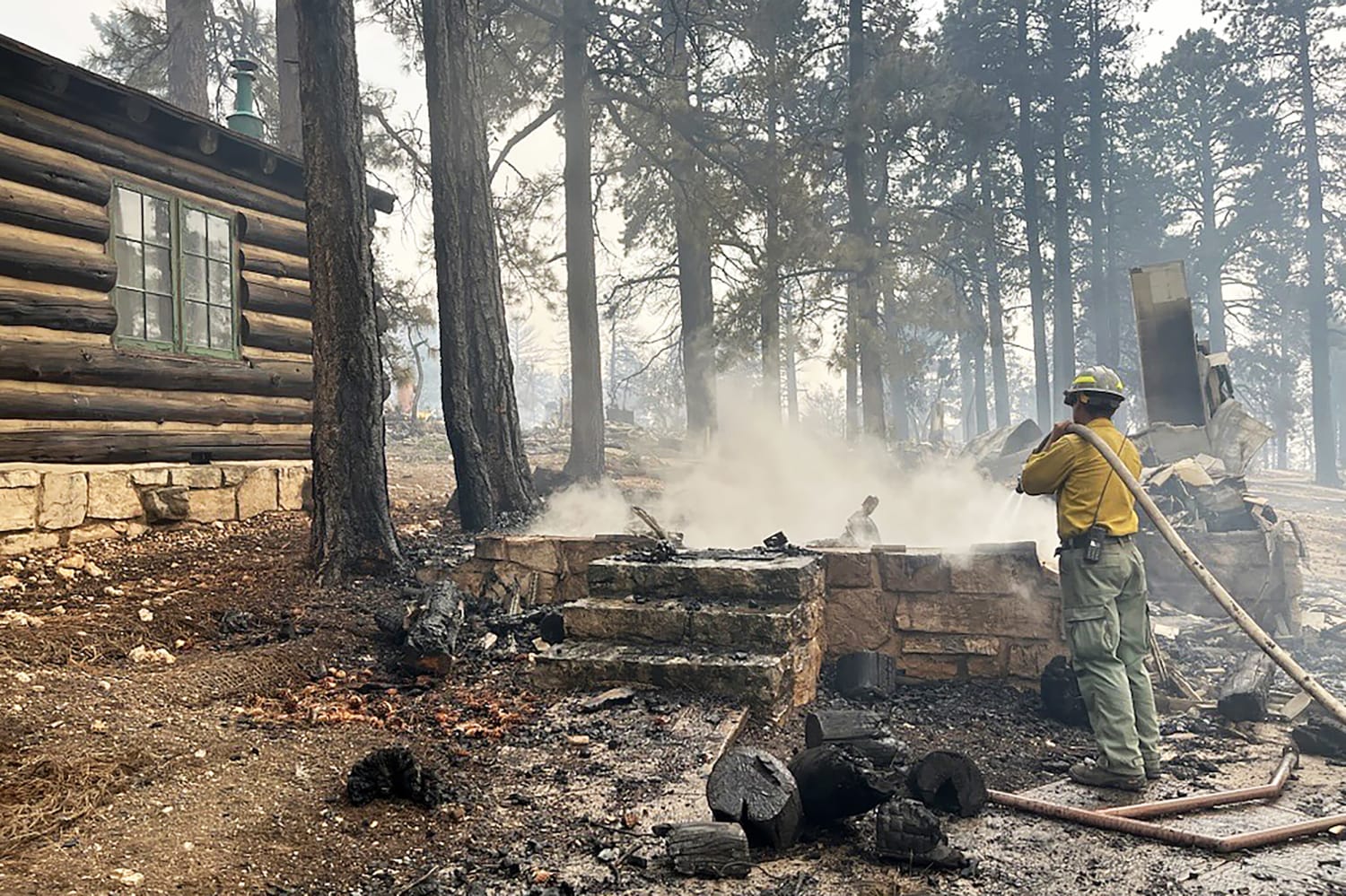

A cherished piece of American heritage has been reduced to ashes, as the iconic Grand Canyon Lodge on the North Rim of the Grand Canyon has been destroyed, leaving residents and visitors in a state of profound grief. The historic structure, which stood for nearly a century as a gateway to the natural splendor of one of the nation’s most awe-inspiring landmarks, was lost in a devastating fire, according to National Park Service officials.
The destruction of the lodge has deeply affected numerous individuals. Residents who spent their formative years with the lodge as a recognizable feature in their environment, and visitors who cherished unforgettable moments under its wooden structure, have conveyed profound sadness about the abrupt removal of what was seen by many as more than just an edifice, but a representation of the Grand Canyon adventure.
Originally constructed in the 1920s and rebuilt after a fire in the 1930s, the Grand Canyon Lodge was known for its rustic stone and log design, perched dramatically on the canyon’s North Rim. The structure offered unmatched views, warm hospitality, and a unique sense of place that attracted visitors from around the world. Its placement, architecture, and history earned it a spot on the National Register of Historic Places, and it played a vital role in the development of tourism at the Grand Canyon.
As news of the destruction spread, messages of condolence and reflection flooded social media platforms and local forums. For some, the lodge represented a tradition spanning generations. Families returned year after year, often at the same time each season, creating lasting connections not just with the location, but with the staff and fellow guests. For others, it was a one-time pilgrimage—a destination that had been checked off a bucket list, only to now live on in memory alone.
The fire, which reportedly started in the early morning hours, was fueled by dry conditions and difficult terrain, complicating response efforts. Fire crews worked quickly to prevent the blaze from spreading to nearby forested areas and historic cabins, but the main lodge building could not be saved. Investigations are currently underway to determine the exact cause of the fire, and officials have pledged transparency as more information becomes available.
The lodge was more than a structure—it served as an economic and cultural cornerstone for the region. It supported local jobs, bolstered the seasonal economy, and was a point of pride for surrounding communities. Its closure, even if temporary, raises concerns about the broader impact on tourism, small businesses, and regional identity. Many in the area worry about what the loss means for the future of North Rim operations, which already face challenges due to accessibility and limited seasonal availability.
In addition to economic effects, the cultural loss is substantial. The Grand Canyon Lodge was a rare example of National Park Service rustic architecture that had been largely preserved in its original form. Its hand-hewn beams, native stonework, and lodgepole pine construction were part of a design philosophy intended to harmonize with the natural environment—a principle that shaped early park development across the United States.
Guests often described the lodge not just as a place to stay, but as a place to feel connected—to nature, to history, and to one another. Its large windows framed the canyon in all seasons, offering dramatic sunsets, quiet morning mist, and the ever-changing play of light on the cliffs. Its fireplace provided warmth on cool desert nights, and its dining hall hosted countless celebrations, reunions, and quiet moments of reflection.
Park rangers and lodge staff, several of whom come back each year with a strong fondness for their work environment, have been significantly impacted. For these individuals, the lodge was beyond mere employment—it represented a vocation, an opportunity to convey their enthusiasm for the canyon and its heritage to travelers from across the globe. Their loss extends beyond a professional level and touches them deeply on a personal level.
Although no official declaration has been made about rebuilding, many have faith that restoration will take precedence. There is historical precedent for these efforts; the lodge was reconstructed after the 1928 fire. Supporters assert that a thoughtful and historically mindful reconstruction could revive the essence of the original, while also meeting current safety and sustainability standards.
While conservationists, historians, and community leaders are considering different approaches to pay tribute to the lodge’s heritage, discussions are underway. Suggestions involve establishing a digital archive of photographs and narratives shared by former visitors, organizing exhibitions in nearby visitor centers, and undertaking oral history projects to capture the lodge’s importance to many generations of park visitors.
The destruction of the Grand Canyon Lodge serves as a stark warning of the delicate nature of cultural sites, particularly those located in sensitive natural settings. With climate changes leading to more frequent and severe wildfires, the urgency for greater investment in conservation, prevention, and emergency readiness becomes increasingly critical.
Yet amid the devastation, there is also a shared determination not to let the lodge’s story end here. Communities surrounding the Grand Canyon and supporters from afar are already rallying around efforts to support park workers, rebuild what was lost, and ensure that future visitors can once again find wonder, rest, and reflection on the canyon’s North Rim.
Currently, the scenery stays unchanged—expansive, quiet, and timeless. Yet, a profoundly human element has vanished along with the Grand Canyon Lodge. As the sun descends over the crimson stones and the breeze whispers through the pines, an area remains; for now, it’s vacant, but not overlooked.